
Transformation of an artificial microRNA to soybean (Glycine max (L.) Merr.) to reduce the parasitism of Meloidogyne incognita
Keywords:
Agrobacterium tumefaciens, microRNA, Minc14137, parasitism, soybean, root-knot nematodeAbstract
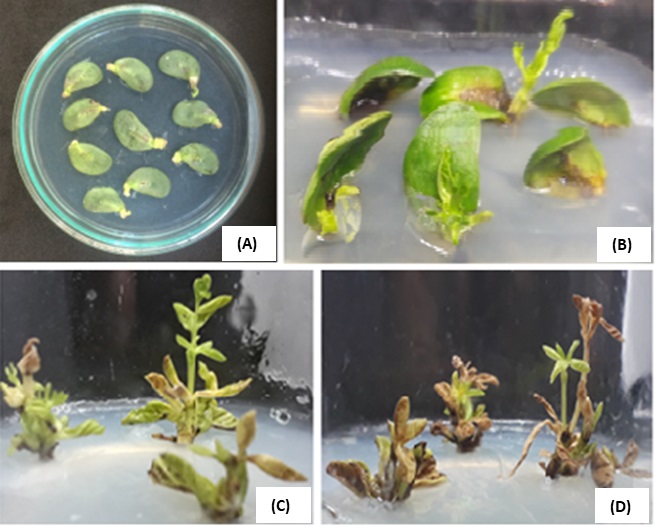
Effectors are specific proteins secreted by nematodes into plant cells that facilitate their parasitism to host plants. Inactivation of these effectors could reduce the parasitic ability of nematodes on plants and the damage caused by nematodes. Gene Minc14137 encodes an effector unknown function that is cloned from the Meloidogyne incognita. Artificial microRNAs capable of inactivating the gene Minc14137 were synthesised and inserted into an expression vector in soybean. This construct was transformed into the soybean cotyledon node mediated by Agrobacterium tumefaciens and regenerated transgenic plants. Copy number and the expression level of miRNA in T0 transgenic plants were determined by the qPCR technique. In T1 transgenic soybean plants, the pathogenic ability of root-knot nematode is reduced by 44.6-50.5% compared to the control plants. Results show that effector MINC14137 could play an important role in the parasitism of Meloidogyne incognita.
DOI:
https://doi.org/10.31276/VJST.63(5).60-64Classification number
4.6
Downloads
Published
Received 7 September 2020; accepted 20 November 2020



