
Student’s psychological difficulties and the need to use smart psychological counselling applications in schools
Keywords:
communication, information technology, mental health, needs, schoolAbstract
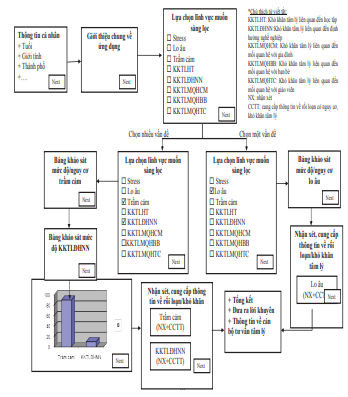
In the context of the industrial revolution 4.0, technological applications for psychological counselling are attracting much attention from individuals, society and scientists. This study examined the psychological difficulties of high school students and their needs of counselling through smartphone/tablet applications. This study also considered the students’ expectation for these applications. Participants included 340 high school students in Hanoi. Results showed that emotion and learning problems were the common psychological difficulties in students. Students also expressed their need of psychological counselling for their difficulties, and the most popularly suggested form was online counselling (via mobile apps, email, video call...). For apps, students had some expectations regarding the cost, payment method, operating system, style, security, etc. A model of psychological counselling for high school students was also proposed. The results will be one of the useful reference bases for developing the idea of building technological applications for Vietnamese students in the future.
Classification number
5.1
Downloads
Published
Received: 22 February 2019; accepted: 10 April 2019



