
Study on β-glucosidase activity from the hyperthermophilic archaeon Pyrococcus furiosus for application in the hydrolysis of soy isoflavone glycosides
Keywords:
isoflavone hydrolysis, Pyrococcus furiosus, soybean, thermophilic, β-glucosidaseAbstract
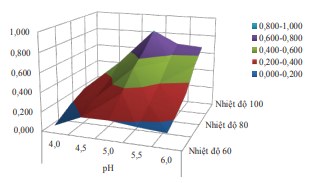
Isoflavones are a class of polyphenolic compounds found with the high concentration in soybeans and soy products. However, most of them are low absorbed in the human stomach as glycosylated forms, one or more sugar molecule(s) conjugated to the aromatic ring or a hydroxyl group. The release of the sugar molecule(s) from the isoflavone glycoside results in an isoflavone aglycone, one of the best-absorbed polyphenols with the high potential of estrogenic, cholesterol-lowering and antioxidation improvement. To convert these glycosides into the corresponding aglycone forms, the β-glucosidase enzyme is required. In this article, the authors investigate the thermophilic ability and catalytic activity of β-glucosidase enzyme from the archaeon Pyrococcus furiosus. The celB gene encoding the β-glucosidase is expressed as the soluble form in E. coli host cells by binding to the GlutathioneS-tranferase (GST) tag with 17.05% and 57.5% yields of total intracellular soluble before and after purification, respectively. Enzymatic activity using 4-nitrophenylβ-D-glucopyranoside (pNPG) as a substrate has been optimised at 100°C, pH 5.0; specific activity is 164.44 U.mg-1; the values of Km, Vmax and Kcat are respectively 0.088 mM, 332.27 U.mg-1.min-1 and 446.9 s-1. The enzyme shows the catalytic activity on soybean glycoside compounds, most genistin and daidzin are converted into the corresponding ag
Classification number
2.10
Downloads
Published
Received: 20 December 2018; accepted: 19 April 2019



