
Study on rheological, thermal properties and water uptake of the polyvinyl chloride/wood flour composites
Keywords:
PVC/wood flour composite, rheological property, thermal stability, wood flourAbstract
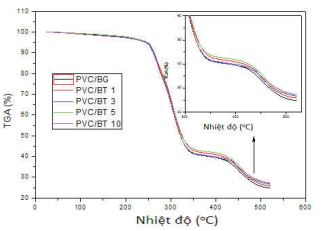
Thermoplastic/wood flour composites have become new materials in the fields of construction and architecture due to the advantages: high mechanical properties, weather resistance, chemical resistance… However, thermoplastic/ wood flour composites have still existed some disadvantages which should be overcome such as poor compatibility between the two phases of plastic and wood flour, easy to absorb the moisture, low temperature resistance. In this study, the composite materials based on poly(vinyl chloride) (PVC) and wood flour were manufactured, and some properties were examined, for example, heat stability, rheological properties and water absorption. Accordingly, the wood flour using tetraethyloctosilicate (TEOS) for surface modification enhanced the compatibility between the resin and wood flour through the formation of SiO2 nanoparticles on the surface of wood flour. Surveying the rheological properties of composite materials indicated the higher hardness: increasing the storage modulus G’. Results of thermal gravimetric analysis (TGA) showed the decomposition temperature of the composites using modified wood flour was improved. At 600o C, the remaining weight of denatured sample increased up to 12%. The moisture absorption of composite using modified wood flour could also be restricted. These results are expected to create the basis for improving the quality of composite materials, helping to expand the scope of applications of PVC/wood flour composites.
Classification number
2.5
Downloads
Published
Received: 29 July 2015; accepted: 11 September 2015



