
Degradation of perfluorooctane sulfonate (PFOS) and perfluorooctanoic acid (PFOA) by ultrasonic processes
Keywords:
degradation, perfluorinate chemicals (PFCs), perfluorooctane sulfonate (PFOS), perfluorooctanoic acid (PFOA), sonolysis.Abstract
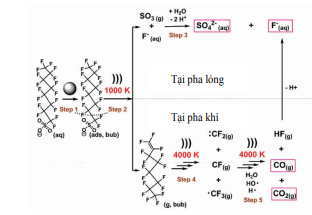
Perfluorooctane sulfonate (PFOS) and perfluorooctanoic acid (PFOA) are shown to be globally distributed, environmentally persistent, and bioaccumulative. Ultrasonic processes or sonochemical methods have been used to degrade PFOX (X = A or S). They have unique advantages over conventional treatment methods because the complete defluorination can be attained without any pretreatment and at higher kinetic rates. The sonochemical processes depend on cavitation, a phenomenon involving formation (nucleation), rapid growth (expansion) until reaching a critical size, and violent collapse. These conditions are highly advantageous for degradation of toxic compounds. Major cavitational effects that contribute towards enhancing the rate of degradation include (a) pyrolysis (compounds on the surface and/or cavity of the bubbles are pyrolyzed at very high-temperature conditions), (b) reactions at gas-liquid interface (breaking bonds of long chain organic compounds), and (c) generation of hydroxyl radicals (oxidation of pollutants). The efficiencies and mechanism of PFOX sonochemical degradation process are also elucidated in detail through sonolysis only, sonochemical treatment, and sono-physiscal prcocess.
Classification number
1.4
Downloads
Published
Received: 26 September 2018; accepted: 1 November 2018



