
Stratigraphy and geological structure of the An Chau basin and its significance in oil and gas exploration
Keywords:
An Chau Basin, cap rock, potential structure, reservoir rock, source rockAbstract
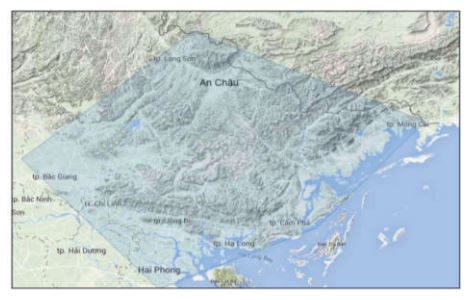
The An Chau Basin is situated in the Northeast structure zone and is one of the largest preCenozoic sedimentary basins in Vietnam. In this study, the authors presents some results of studying geological and stratigraphic conditions for the formation of a petroleum system in the region based on the field observation data together with reinterpretation of geological and geophysical data of the previous studies. The results have shown that the An Chau Basin demonstrates sufficient conditions of a petroleum system. In which, the source rocks are organic matter-rich, black shale and claystone of the Mau Son and Van Lang formations while the reservoir rocks are very coarse - medium grained, highly porous and permeable sandstones of the T-K formation. In addition, the C-P fractured/ kastified carbonate rocks are also considered good reservoir rocks in the deeper area. Two types of cap rock formation have been identified: The regional cap rock is the T1-2 shallow marine shale or claystone that demonstrates a steady thickness and wide development while the T3 -K continental shale and claystone deposited locally in the continental grabens are suggested to be the local cap rock formation. The potential structures include the C-P carbonate basement developed in the horst structures and the large scale anticlines developed in the MZ clastic sedimentary rocks.
Classification number
1.5
Downloads
Published
Received: 4 July 2016; accepted: 18 August 2016



