
Hiện trạng nuôi tôm hùm lồng bè tập trung và chất lượng môi trường nước tại vịnh Xuân Đài, tỉnh Phú Yên
Từ khóa:
Chất lượng nước, nuôi lồng bè, tôm hùmTóm tắt
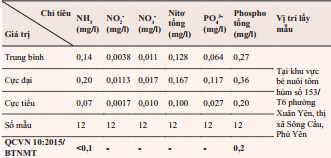
Hiện trạng nuôi tôm hùm lồng bè được tiến hành điều tra dựa trên phiếu khảo sát có sự tham gia của cộng đồng (PRA) tại vịnh Xuân Đài, tỉnh Phú Yên. Kết quả điều tra cho thấy, nghề nuôi tôm hùm có 3 hình thức: nuôi trong lồng treo, lồng chìm và kết hợp cả hai hình thức. Kinh nghiệm nuôi của người dân từ 10-20 năm chiếm 54%. Số lồng nuôi đang ngày một tăng lên đáng kể. Người dân sử dụng thức ăn tươi hoàn toàn (như cá tạp, ghẹ) để cho tôm hùm ăn. Phần lớn thức ăn thừa không được thu gom đưa lên bờ. Tiến hành khảo sát, đo đạc chất lượng nước nuôi tôm hùm tại địa điểm nghiên cứu trong 12 đợt khảo sát kéo dài 4 tháng, kết quả cho thấy chất lượng nước, đặc biệt là ở tầng đáy, đang diễn biến ngày càng xấu hơn. Cụ thể là nhiệt độ, pH, độ mặn, DO hầu như ổn định trong thời gian khảo sát và nằm trong giới hạn cho phép, nhưng độ trong có sự biến động khá lớn từ đợt 1 đến đợt 8 so với các đợt thu mẫu khác. Nồng độ ammonia (NH3 ) hầu hết vượt tiêu chuẩn cho phép, đặc biệt là ở tầng đáy. Nồng độ nitrite (NO2 - ) có xu hướng tăng ở tầng đáy. Nồng độ nitrate (NO3 - ) hầu như ổn định. Giá trị nitơ tổng ở tầng đáy tương đối cao hơn các tầng còn lại, thấp nhất ở mức 0,1 mg/l và cao nhất là 0,2 mg/l. Nồng độ PO4 3- hoà tan có sự dao động lớn tại tầng mặt, tầng giữa và tầng đáy, tăng cao nhất là đợt 4. Nồng độ phospho tổng giữa các tầng hầu hết đều vượt tiêu chuẩn cho phép và diễn biến theo chiều hướng xấu.
Chỉ số phân loại
4.5
Tải xuống
Đã xuất bản
Ngày nhận bài: 31/05/2018; ngày chuyển phản biện: 05/06/2018; ngày nhận phản biện: 10/07/2018; ngày chấp nhận đăng: 14/07/2018


