
BIOSORPTION OF LEAD(II), COPPER(II) AND CADMIUM(II) IONS IN SINGE AND MULTI- METAL SYSTEMS BY PRETREATED AEROBIC GRANULE SLUDGE
Keywords:
aerobic granule, biosorption, Cd2 , competitive sorption, Cu2 , Pb2Abstract
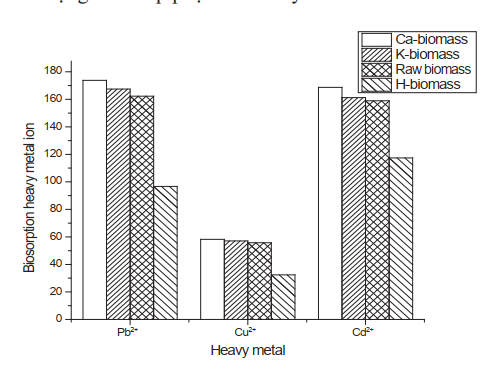
Heavy metals are present in nature and industrial wastewater; due to their mobility in natural water ecosystems and toxicity, the presence of heavy metals in surface water and ground water has become a major inorganic contamination problem. Discharge and treatment of industrial wastewater containing heavy metals are important issues in environmental protection, if unrecognized or inappropriately treated, heavy-metal toxicity can result in serious hazards. The paper describes the study on the biosorption of Lead (II), Copper (II) and Cadmium (II) ionsfrom single component and multi-component systems in the equilibrium system and in batch sorption experiment using pretreated aerobic granular sludge. The results have shown that Ca-biomass has been an efficient biosorbent for the removal of Pb2+, Cu2+ and Cd2+ ions from an aqueous solution. The single-metal sorption capacity of the aerobic granules for Pb2+ has been inhibited by the presence of Cd2+ and Cu2+ ion; the decreasing affinity of aerobi granular sludge for the three metal ions has been established as: Pb2+ > Cu2+ > Cd2+. Factors such as hydration effect and electronegative charge may contribute to the competitive sorption results. The metal removal capacities of Ca-biomass have been six times higher than those of activated carbon, especially the Cd2+ removal capacity. The Langmuir model has been better than the Freundlich model in regard of describing the Pb2+, Cu2+ and Cd2+ ion biosorption based on raw biomass and Ca-biomass; the maximum capacity Qmax determined by the Langmuir model has fitted to the experimental data.
Classification number
2.7
Downloads
Published
Received: 4 February 2015; accepted: 23 March 2015



