
Study on absorption spectrum in dyeing waste water and influences of some ions on determination of COD by 54 NM UV absorption spectrum
Keywords:
dyeing wastewater, ion effect, TSS, UV-COD, UV-Vis spectrumAbstract
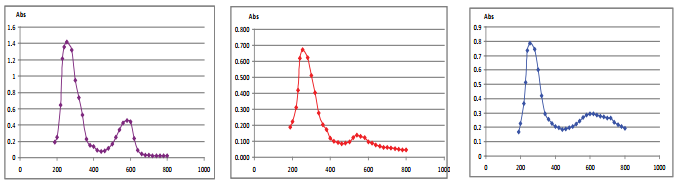
In this study of COD measurement by UV-254 nm, the UV-Vis spectrums of some organic compounds in dyeing wastewater as well as the influence of the ions such as NO2 - , NO3 - , NH4 +, SO4 2- and TSS have been investigated. The results have shown that organic compounds in dyeing wastewater have been absorbed in both UV and Vis ranges, optimally absorbed at the UV range of 254 nm. After oxidation by Fenton for these wastewaters, the UV spectrums have not been changed, meanwhile visible spectrums have been moved at the wavelength from 600 nm to 360 nm (using violet dye color), from 540 nm to 360 nm (using pink) and from 620 nm to 340 nm (using black) and changed into UV range. The ion effect has been insignificant with the concentration from 0 to 300 mg/l. From 30 mg/l upwards, TSS has affected remarkably the COD measurement because of the light diffusion. The diffusibility of TSS depends on the property and size of TSS matters in water. Therefore, in order to measure COD by UV method, the filtration and/or calculation are possible to be conducted. The difference is less than 10% as compared between the COD measurement using UV method and TCVN method. The coefficient of COD concentration calculation has been determined KCOD= (709 ±5) mg/l.
Classification number
2.4
Downloads
Published
Received: 25 February 2015; accepted: 31 March 2015



